
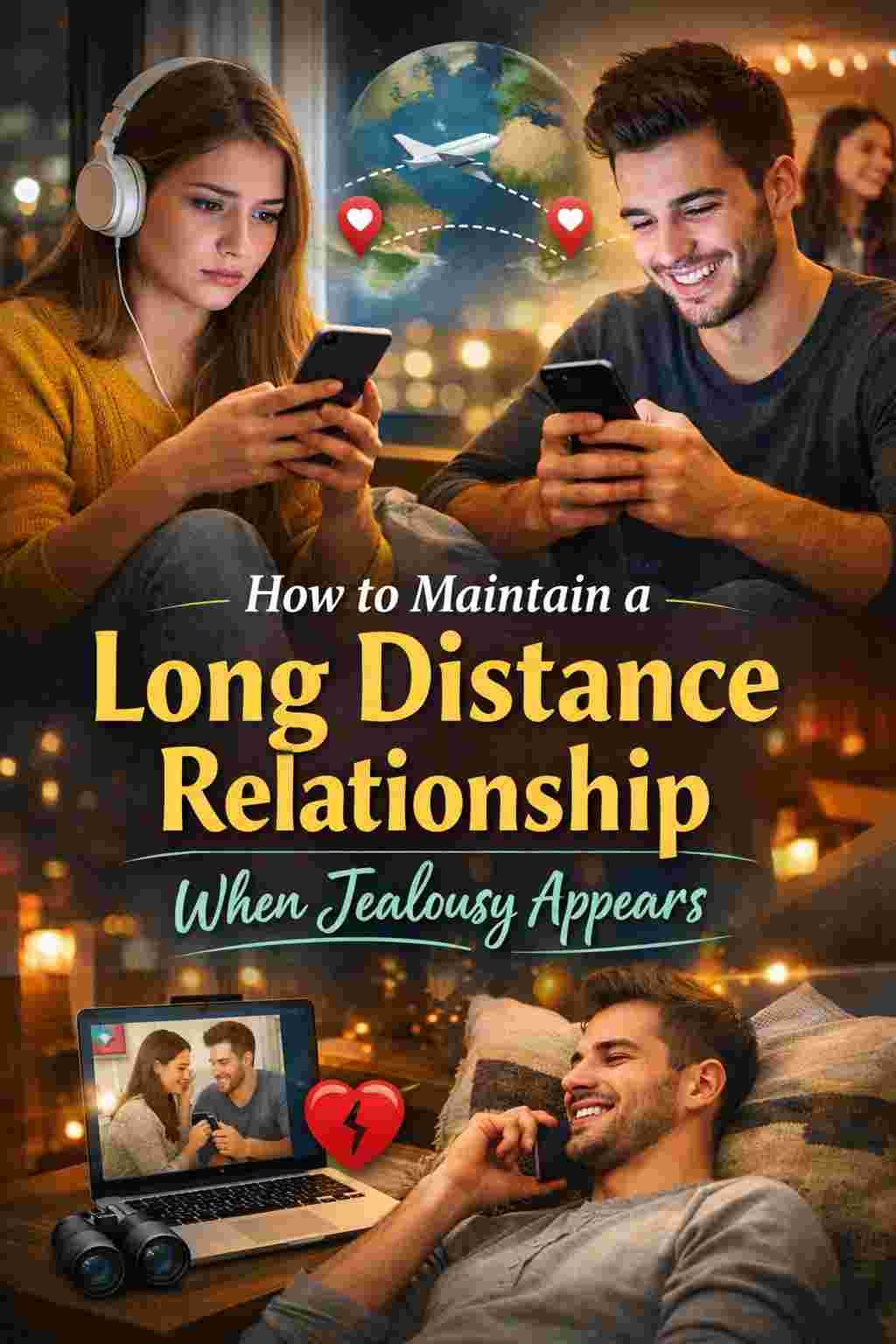
A long-distance relationship often starts with hope, trust, and excitement. You believe that love will be strong enough to handle the distance. For a while, it usually is. But as time passes, small doubts can begin to grow. A delayed reply. A changed routine. A photo on social media that raises questions. Slowly, jealousy appears.
Learning how to maintain a long distance relationship when jealousy appears is essential because distance creates emotional gaps. When you cannot see your partner daily, your mind fills in the missing details. Sometimes it fills them with fear instead of facts. This does not mean the relationship is weak. It means the emotional needs of both partners need more attention.
Jealousy in long distance relationships is more common than many people admit. It often comes from uncertainty rather than mistrust. You may love your partner deeply and still feel anxious about who else has access to their time and energy. These feelings can feel confusing and even shameful, but they are normal.
The real danger is not jealousy itself. The danger is ignoring it or expressing it in unhealthy ways. Unaddressed jealousy can turn into arguments, emotional distance, or controlling behavior. When handled with honesty and care, jealousy can become a doorway to deeper communication and stronger trust.
This blog will guide you through understanding why jealousy appears, how to recognize its early signs, and how to deal with it in a healthy way. You will learn practical steps to protect trust, improve communication, and build emotional security even when miles separate you. With the right mindset and tools, jealousy does not have to damage your relationship. It can help you grow together instead.
Understanding Jealousy in Long Distance Relationships
Jealousy in long distance relationships often appears because distance removes daily reassurance. When partners live apart, they miss out on small moments that build emotional safety. Simple things like seeing a smile, sharing a meal, or noticing body language are no longer available. Without these signals, emotional insecurity can grow.
Distance also limits real time information. You do not always know what your partner is doing, who they are with, or how their day truly feels. This lack of visibility creates space for assumptions. When communication is limited or unclear, imagination steps in to fill the gaps. Unfortunately, imagination often leans toward worst case scenarios.
Another reason jealousy appears is the fear of emotional replacement. When your partner builds friendships or connections near them, it can trigger anxiety. You may worry that someone else can offer what you cannot from afar. This fear does not mean you lack trust. It means you care deeply and want reassurance that you still matter.
It is important to understand that jealousy does not mean a lack of love. In many cases, it is the opposite. Jealousy shows attachment and emotional investment. The problem arises when jealousy is misunderstood or left unmanaged. When people feel ashamed of their jealousy, they often suppress it. This leads to resentment and emotional distance over time.
Long distance relationship trust issues often begin when jealousy is treated as a personal failure instead of an emotional signal. Jealousy usually points to unmet needs such as reassurance, clarity, or consistency. Recognizing this allows couples to address the real issue rather than blaming each other.
By understanding why jealousy appears, couples can stop reacting with fear and start responding with awareness. This awareness creates the foundation for healthier communication and emotional stability throughout the relationship.
Common Triggers of Jealousy in Long Distance Relationships
Jealousy in a long distance relationship rarely appears without a trigger. Often, it starts with small changes that feel harmless on the surface but create emotional unease over time.
One of the most common triggers is reduced or inconsistent communication. When calls become shorter or texts take longer to receive, the mind starts asking questions. You may wonder if your partner is losing interest or prioritizing someone else. Even when there is a reasonable explanation, the emotional impact can still be strong.
Social media is another major trigger. Seeing your partner like photos, comment on posts, or appear in group pictures without context can create false narratives. Without clear communication, social media becomes a source of comparison and insecurity. It often highlights what you cannot see or share from a distance.
Sudden changes in routine can also spark jealousy. If your partner starts working late, going out more often, or changing habits, it may feel threatening. These changes can make you feel excluded from their daily life. This is especially true when updates are vague or delayed.
Fear of emotional replacement is a powerful trigger as well. You may worry that someone physically closer can provide comfort, attention, or support more easily. This fear is common in long distance relationships and does not mean your partner is unfaithful. It means the distance makes emotional access feel fragile.
Comparison with other couples can quietly increase jealousy too. Seeing couples spend time together in person can remind you of what you are missing. This comparison can turn into self doubt and emotional insecurity if not addressed.
Recognizing these triggers helps couples respond with understanding rather than accusation. Awareness makes it easier to discuss concerns before they turn into conflict.
Signs Jealousy Is Becoming Harmful in a Long Distance Relationship
Jealousy becomes harmful when it starts affecting behavior, communication, and emotional connection. Recognizing early warning signs can prevent long term damage.
One common sign is constant overthinking. You may replay conversations in your mind or read too deeply into short messages. Small details begin to feel suspicious, even when there is no clear reason. This mental loop creates stress and emotional exhaustion.
Checking behaviors are another warning sign. This can include repeatedly asking where your partner is, who they are with, or what they are doing. While curiosity is normal, constant monitoring signals emotional insecurity. Over time, it can make your partner feel controlled rather than trusted.
Passive aggressive communication often follows unresolved jealousy. Instead of expressing feelings directly, you may use sarcasm, guilt, or silence. Messages become colder, and conversations feel tense. This behavior creates distance instead of solving the issue.
Emotional withdrawal is also a red flag. When jealousy feels overwhelming, some people shut down to protect themselves. They may respond less, avoid deeper conversations, or pull back emotionally. This withdrawal can make the relationship feel empty and disconnected.
Another sign is frequent arguments over small issues. Jealousy can make minor misunderstandings feel much bigger than they are. These repeated conflicts slowly weaken trust and emotional safety.
Understanding how to deal with jealousy in a relationship starts with recognizing these signs early. When addressed with honesty and care, jealousy does not have to harm the relationship. Awareness creates the opportunity for healthier communication and emotional growth.
Healthy Communication When Jealousy Appears
Learning how to maintain a long distance relationship when jealousy appears depends heavily on how jealousy is communicated. Jealousy itself is not the problem. The way it is expressed often determines whether it brings couples closer or pushes them apart.
The first step is expressing feelings without blame. Instead of accusing your partner of causing jealousy, focus on describing your own emotions. Saying you feel anxious or insecure opens the door to understanding. Saying your partner is doing something wrong often leads to defensiveness.
It is also important to ask for reassurance in a healthy way. Reassurance should come from a place of vulnerability, not suspicion. Asking for clarity or comfort helps your partner understand what you need emotionally. Demanding proof or explanations can create pressure and tension.
Listening plays an equally important role. When your partner responds, try to listen without interrupting or preparing a counterargument. Many long distance relationship trust issues grow because partners feel unheard. Feeling understood reduces the intensity of jealousy and builds emotional safety.
Avoid discussing jealousy during moments of high emotion, especially over text. Messages lack tone and context, which can easily lead to misunderstandings. If possible, talk during a calm video or voice call. This allows both partners to hear tone and feel more connected.
Here are a few examples of healthy phrasing:
- I feel uneasy when communication changes suddenly and I need reassurance.
- I am not accusing you, but I want to share how I feel so we can understand each other.
- Can we talk about what helps us feel more secure when we are apart?
Healthy communication helps jealousy become a shared challenge rather than a personal flaw. When both partners feel safe expressing emotions, jealousy loses its power to cause conflict.
Creating Communication Routines That Build Emotional Security
One of the most effective ways to reduce jealousy in long distance relationships is setting clear communication expectations. Unspoken assumptions often lead to disappointment, confusion, and emotional insecurity.
Many couples struggle because they confuse constant communication with healthy communication. Talking all day is not always possible or necessary. What matters more is consistency and quality. Knowing when and how you will connect creates emotional stability.
Time zones and daily responsibilities should be respected. When expectations are unrealistic, missed calls or delayed replies can feel personal. Discussing schedules openly helps both partners understand each other’s availability without resentment.
Predictable check ins are especially helpful. These do not have to be long conversations. A short message in the morning or a planned call at night can provide reassurance. These routines reduce overthinking and help partners feel emotionally connected.
It is also important to avoid constant availability pressure. Expecting immediate responses can increase anxiety for both partners. Allowing space shows trust and respect for individual lives.
Healthy communication expectations may include:
- Agreeing on preferred times for calls
- Understanding busy periods in advance
- Clarifying how often updates feel supportive, not overwhelming
When communication expectations are clear, emotional security improves. This stability makes jealousy easier to manage and less likely to escalate into conflict.
Rebuilding Trust After Jealousy Has Caused Damage
Rebuilding trust in a long distance relationship takes time, patience, and consistent effort. When jealousy has already caused arguments or emotional distance, it is important to focus on healing rather than blame.
Transparency is a key part of rebuilding trust, but it must be balanced. Sharing important information helps restore confidence, but oversharing every detail can create dependency and anxiety. The goal is openness, not constant reporting.
Consistency matters more than promises. Trust grows when actions align with words over time. Showing up when you say you will, following through on commitments, and being emotionally present all contribute to rebuilding trust.
Many people try to fix jealousy through monitoring behaviors. Checking phones, demanding updates, or testing loyalty may offer temporary relief, but they weaken trust in the long run. Trust is built through reliability, not surveillance.
Healing also requires realistic timelines. Trust does not return instantly after reassurance or apologies. Both partners need patience as emotional wounds settle. Rushing the process can create frustration and setbacks.
Rebuilding trust may involve:
- Honest conversations about what was hurtful
- Clear boundaries moving forward
- Consistent emotional support
- Allowing space for healing without pressure
Jealousy does not have to define the relationship. When addressed with accountability and care, it can lead to stronger trust and deeper emotional understanding.
Self Work and Emotional Regulation in Long Distance Relationships
Learning how to maintain a long distance relationship when jealousy appears also requires personal responsibility. While communication and trust are shared efforts, managing jealousy starts from within.
The first step is identifying personal triggers. Jealousy often comes from specific situations rather than general mistrust. It may be triggered by social media, delayed replies, or fear of being replaced. Recognizing these triggers helps you respond thoughtfully instead of reacting emotionally.
Past relationship experiences can strongly influence current emotions. If you have experienced betrayal, abandonment, or inconsistent love before, those memories can resurface in a long distance relationship. This does not mean your current partner is responsible for past pain. It means those emotions need attention and healing.
Building self confidence independently plays a major role in controlling jealousy. When your sense of worth depends entirely on your partner’s attention, emotional insecurity increases. Maintaining your own goals, interests, and routines creates balance and stability.
Healthy self work may include:
- Journaling emotions instead of sending reactive messages
- Practicing emotional regulation techniques such as pausing before responding
- Reminding yourself of evidence of trust rather than imagined threats
Maintaining friendships, hobbies, and personal ambitions is also essential. A full and independent life reduces emotional pressure on the relationship. When both partners feel secure individually, the relationship becomes stronger and more resilient.
Healthy Boundaries That Protect Love Not Restrict It
Boundaries play a crucial role in managing jealousy in long distance relationships. Without clear boundaries, reassurance can slowly turn into control and care can become suspicion.
Healthy boundaries help define what feels respectful and supportive to both partners. They are not rules meant to limit freedom but agreements that protect emotional well being.
One important boundary is understanding the difference between reassurance and control. Reassurance involves voluntary comfort and openness. Control involves pressure, monitoring, or demands. When reassurance becomes an obligation, it often leads to resentment.
Social media boundaries are also important. Discussing what feels comfortable regarding posts, interactions, and online presence prevents misunderstandings. This does not mean restricting behavior. It means creating shared understanding.
Privacy versus secrecy is another key topic. Everyone deserves personal space, even in a committed relationship. Privacy allows individuality. Secrecy involves hiding information that affects trust. Clarifying this difference helps reduce suspicion.
Examples of healthy boundaries include:
- Respecting time spent with friends without constant updates
- Agreeing on what information should be shared openly
- Allowing space for personal downtime without guilt
When boundaries are clear and respected, jealousy loses its intensity. Trust grows naturally when both partners feel safe and free at the same time.
How Jealousy Can Strengthen a Long Distance Relationship
Jealousy does not have to weaken a long distance relationship. When addressed with honesty and emotional maturity, it can become a tool for growth and deeper connection.
Talking openly about jealousy encourages vulnerability. Sharing fears instead of hiding them builds emotional intimacy. This honesty allows partners to understand each other on a deeper level.
Jealousy can also strengthen commitment when both partners choose patience over defensiveness. Working through emotional challenges together builds confidence in the relationship’s strength. Each resolved conflict becomes proof that the bond can survive distance and uncertainty.
Long term trust habits often develop during these moments. Consistent communication, emotional accountability, and mutual reassurance become part of the relationship’s foundation. These habits remain valuable even when the distance eventually ends.
Navigating jealousy together also prepares couples for future stages of the relationship. Emotional growth developed during long distance periods often leads to healthier in person dynamics later.
Jealousy is not a sign that a relationship is failing. It is a sign that emotions matter. When both partners approach it with respect and understanding, jealousy can deepen trust, strengthen commitment, and create a more resilient long distance relationship.