
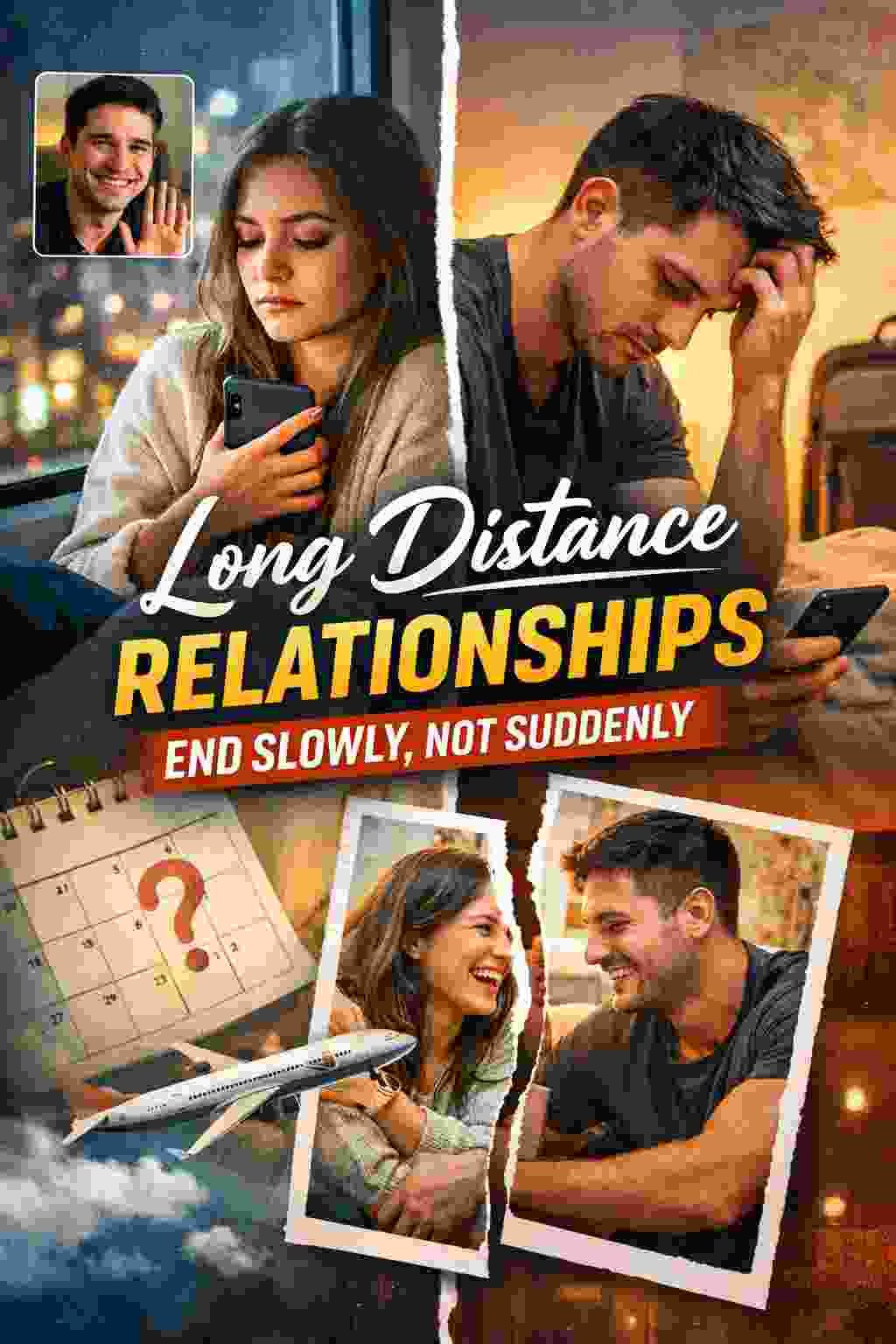
Long distance relationships often begin with hope, excitement, and a strong emotional bond. Two people believe that love, trust, and commitment will be enough to carry them through the miles between them. At first, the distance feels manageable. Messages feel meaningful. Calls feel special. Every reunion feels worth the wait.
But over time, something changes for many couples.
The relationship does not usually end with one big fight or a dramatic goodbye. Instead, it slowly weakens. Conversations feel shorter. Effort feels uneven. Emotional closeness fades even though communication still exists. Many couples reach a point where they feel confused and emotionally drained, unsure of what exactly went wrong.
This is where most people ask the wrong question.
They ask if long distance relationships fail because of distance. The truth is more uncomfortable. Distance itself is rarely what breaks most long distance relationship couples apart. Many couples handle physical separation well. What actually causes damage is what distance exposes. Emotional gaps. Communication problems. Unspoken expectations. Unresolved insecurities.
When partners are not physically together, every weakness in the relationship becomes more visible. Small misunderstandings grow faster. Lack of reassurance feels heavier. Emotional neglect feels sharper. Distance removes the safety net that often hides problems in close distance relationships.
This is why so many people search for answers about long distance relationship problems and why long distance relationships fail. They are not looking for blame. They are looking for clarity.
This blog is not here to judge or discourage. It is here to explain the real reasons long distance relationship struggles happen and why breakups usually occur slowly, not suddenly. You will learn how emotional distance forms, how effort becomes unbalanced, and how trust erodes when issues remain unaddressed.
If you are in a long distance relationship, this guide will help you recognize warning signs early. If you are healing from a breakup, it will help you understand what truly went wrong.
Distance does not destroy love on its own. What breaks most long distance relationship couples apart is what they fail to protect while they are apart.
Distance Is Not the Problem. Emotional Disconnection Is
Many people assume that being apart is the main reason long distance relationships fail. It seems logical. After all, partners cannot hug, hold hands, or share daily routines. This assumption makes distance feel like the enemy.
In reality, countless couples survive long distance successfully. They manage schedules, make time for video calls, and prioritize visits. These couples show that physical separation alone does not break a relationship. What matters more is emotional availability.
Emotional connection requires attention, honesty, and effort. When one or both partners fail to provide this, distance simply magnifies the problem. Physical separation only exposes weaknesses that were already present. Couples who communicate openly and remain emotionally engaged often thrive despite hundreds or thousands of miles between them.
How Emotional Distance Slowly Replaces Intimacy
Emotional distance does not happen overnight. It begins subtly. Small moments of disengagement grow over weeks or months. A partner may stop sharing daily experiences. Conversations may become brief or surface-level.
Over time, this emotional withdrawal replaces intimacy. Partners stop feeling fully seen or heard. Calls feel obligatory rather than enjoyable. Messages lose warmth and spontaneity.
Emotional distance is more damaging than the physical miles because it affects the heart of the relationship. When partners feel disconnected, no amount of texting, calling, or visiting can fully restore closeness without intentional effort.
Recognizing emotional disconnection early is critical. Couples who address the issue before it becomes entrenched have a much higher chance of keeping their bond strong. Understanding that distance is not the enemy, but emotional withdrawal is, sets the stage for building strategies that prevent small cracks from becoming breakups.
Poor Communication Habits That Slowly Kill the Connection
Communication is the foundation of any relationship, but it becomes even more crucial in long distance love. Without daily face-to-face interaction, couples rely on texts, calls, and video chats to maintain connection. When communication is inconsistent or shallow, emotional closeness begins to erode.
Inconsistent communication creates uncertainty. One partner may send long messages while the other responds sporadically or with short replies. Over time, the partner who feels ignored may start questioning their importance in the relationship. Mixed signals breed frustration, doubt, and a sense of being taken for granted.
Surface-level conversations also contribute to disconnection. Talking about daily routines or minor events is not enough to maintain a deep emotional bond. Avoiding difficult or meaningful topics prevents couples from truly understanding each other’s needs and feelings. Over time, partners may feel like they are strangers sharing small updates rather than a couple growing together.
Another major issue is the lack of tone and body language. Texts and even video calls can be misinterpreted. A neutral response might feel dismissive. Humor may be misunderstood. Small misunderstandings accumulate, creating emotional distance that could have been prevented with clearer, intentional communication.
To maintain a strong bond, it is important to communicate consistently, openly, and honestly. Discuss feelings, share daily experiences in detail, and address concerns as they arise. By improving communication habits, couples can prevent emotional drift and reinforce the connection that distance makes more challenging to sustain.
When One Partner Tries Harder Than the Other
In many long distance relationships, effort is not always evenly shared. One partner may find themselves constantly initiating calls, planning visits, or making sacrifices to maintain the connection. At first, this imbalance may feel like a natural part of the relationship, but over time it can lead to frustration and resentment.
Signs of unbalanced effort are often subtle. One partner might always be the first to text or call, while the other responds only when convenient. The partner doing more may feel exhausted and emotionally drained. Over time, they may start to question whether their efforts are appreciated or reciprocated.
Resentment quietly builds when one person consistently carries the weight of the relationship. Emotional exhaustion grows alongside feelings of being taken for granted. Even small imbalances can slowly chip away at trust and intimacy, making each interaction feel like a chore rather than a shared experience.
This imbalance can push couples apart emotionally. The partner putting in more effort may withdraw to protect themselves, creating a cycle where both partners feel disconnected. Addressing unbalanced effort requires honest conversations, clear expectations, and a willingness from both partners to contribute equally to the relationship.
When effort is shared, both partners feel valued, supported, and motivated to maintain the connection despite the physical distance. Without it, emotional closeness erodes, and even the strongest love can struggle to survive.
Trust Issues and Insecurity That Distance Amplifies
Distance can intensify insecurities that exist in any relationship. When partners are not physically together, small doubts and fears can grow unchecked. Overthinking becomes common, and jealousy may appear even in otherwise trusting relationships. Without daily reassurance, the mind often fills in the gaps with worst-case scenarios.
Emotional trust is just as important as physical fidelity. A partner may remain faithful physically but become emotionally distant. Consistency, reliability, and openness are essential for maintaining trust over long distances. When these qualities are missing, even small actions can feel like betrayal.
Small doubts can quickly turn into constant suspicion. One partner may check messages, question intentions, or misinterpret interactions with others. This constant monitoring erodes the sense of safety and comfort that a relationship needs. Over time, both partners may feel defensive, misunderstood, or emotionally exhausted.
Addressing trust issues requires intentional communication and transparency. Sharing feelings, being honest about insecurities, and providing reassurance can help prevent jealousy and suspicion from taking root. When trust is strong, distance becomes a challenge to navigate rather than a destructive force in the relationship.
No Clear Plan for Closing the Distance
Many long distance relationships struggle because couples never agree on a clear plan for the future. Without a timeline or shared goal, sacrifices begin to feel meaningless. Waiting indefinitely creates emotional uncertainty that can slowly erode commitment and motivation.
Uncertainty is often more painful than the distance itself. Partners may question whether the relationship is moving forward or simply stuck in limbo. This can lead to frustration, resentment, and a growing sense that their efforts are going nowhere. Without clarity, even small challenges feel heavier and more discouraging.
The absence of a concrete plan can also break motivation. When couples do not know when they will reunite or how their lives will align, it is easy to lose hope. Daily routines and minor frustrations take on greater significance, and emotional energy diminishes.
Waiting without direction can feel different from being patient. Patience has a purpose; it is tied to clear expectations and shared goals. Stagnation, however, leaves couples unsure of what they are working toward. Couples who communicate openly about timelines, future plans, and next steps are far more likely to maintain connection and stay emotionally invested despite the distance.
Emotional Neglect and Loneliness Inside the Relationship
Even when couples communicate every day, emotional needs can go unmet. Long distance relationships often rely on brief messages or scheduled calls, which may not provide the depth of connection both partners need. Over time, this lack of emotional presence can create a sense of loneliness within the relationship.
Feeling alone while being in a relationship is painful. A partner may be physically attentive through texts or calls but fail to offer genuine empathy, understanding, or support. When emotional intimacy fades, small interactions feel empty, and partners may begin to feel disconnected despite constant communication.
Emotional neglect is often more damaging than the physical distance itself. Loneliness within a relationship undermines trust, intimacy, and motivation. It can leave one or both partners seeking comfort elsewhere. This might be in hobbies, friendships, or distractions that fill the emotional void, further weakening the bond between the couple.
Recognizing emotional neglect early is crucial. Partners should prioritize meaningful conversations, express appreciation, and show care in ways that resonate emotionally. Maintaining this connection helps prevent loneliness from taking root and strengthens the relationship against the challenges that distance brings.
Conflicting Expectations and Love Languages
Many long distance relationships struggle because partners assume their way of showing love is understood and appreciated. Each person may express care differently, based on their love language. When these differences are not recognized, one partner can feel unloved or undervalued even when the other is trying their best.
Distance amplifies these misunderstandings. A partner who expresses love through words may feel they are giving enough attention, while the other partner, who values quality time or acts of service, may feel neglected. Small differences in expectations can quickly turn into ongoing disappointment and frustration.
It is important for couples to communicate their emotional needs clearly. Understanding each other’s love language and making intentional efforts to meet those needs can prevent unnecessary tension. By aligning expectations and showing love in ways that resonate with each partner, couples can maintain emotional closeness and reduce the risk of drifting apart over time.
Growing in Different Directions Without Growing Apart on Purpose
Over time, partners may experience changes in their careers, education, personal goals, or family responsibilities. These life changes can shift priorities and create new challenges in maintaining the relationship. When growth is not shared or supported, emotional distance can develop without either partner realizing it.
Sometimes, couples simply outgrow each other. Interests, values, and life paths evolve, and without open communication, partners may drift apart quietly. The emotional disconnect that forms is subtle at first but can grow until both feel a gap that is difficult to bridge. Recognizing and discussing personal growth and future goals is essential to staying aligned and maintaining a strong emotional connection.
Avoiding Conflict Until Emotional Shutdown Happens
Many long distance couples avoid arguments because they fear losing limited time together. They may let small issues slide or ignore feelings of frustration, believing that avoiding conflict will protect the relationship. In the short term, this can feel like a peacekeeping strategy, but over time, unresolved issues accumulate.
Silent resentment builds as small disagreements and unspoken concerns pile up. Emotional walls form when partners stop expressing true feelings, and meaningful connection becomes harder to sustain. Avoiding conflict does not eliminate problems; it only delays addressing them. Couples who communicate honestly, even about difficult topics, are more likely to prevent emotional shutdown and keep the relationship resilient despite the distance.
Conclusion: Long Distance Relationships End Slowly, Not Suddenly
Most long distance relationships do not break because of one major mistake or sudden event. Instead, they end slowly as small disconnections accumulate over time. Missed conversations, unspoken frustrations, unbalanced effort, and emotional neglect quietly erode the bond between partners.
Distance often reveals weaknesses rather than creating them. It exposes gaps in communication, trust, and emotional support that may have existed even in close proximity. Understanding this helps couples see that challenges are signals, not signs of inevitable failure.
Awareness and intentional effort can prevent a relationship from falling apart. Open communication, shared goals, balanced effort, and emotional presence are key to maintaining a strong connection. Recognizing warning signs early allows couples to address issues before they become insurmountable.
If you are in a long distance relationship, take time to reflect honestly on your connection. Discuss your needs, reassure each other consistently, and prioritize quality emotional engagement. Distance does not have to weaken love. With care, commitment, and awareness, couples can strengthen their bond and navigate the challenges of long distance together.